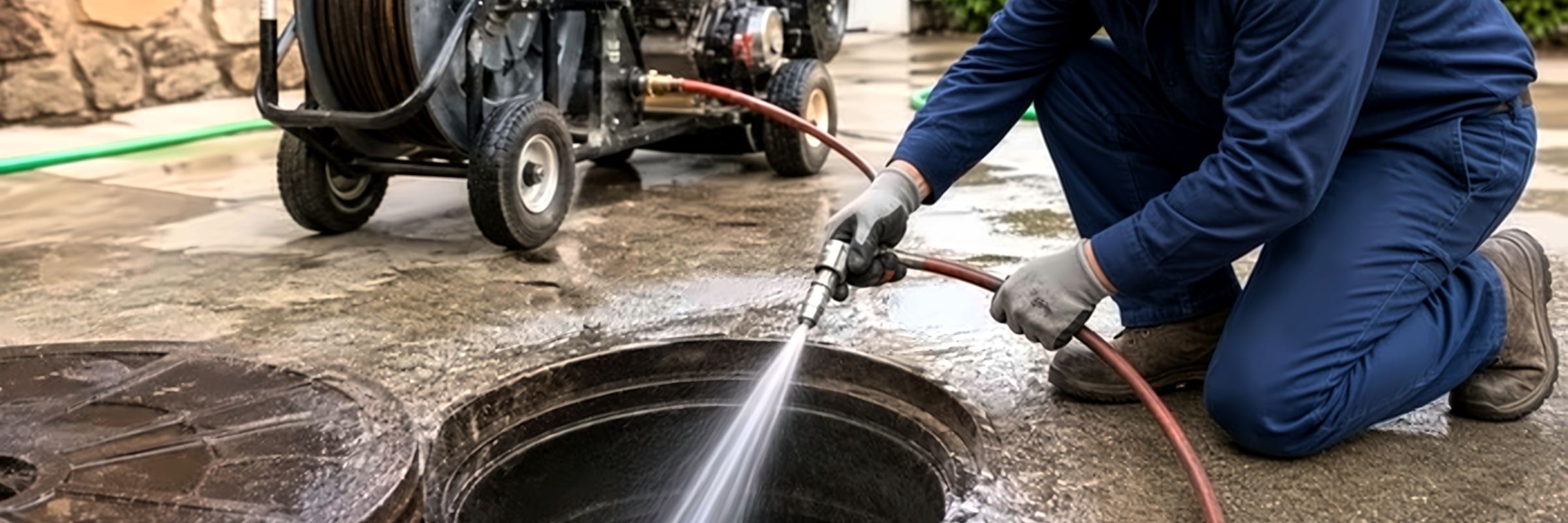
Hydro Jet Drain Cleaning Service uses water at very high pressure to scour the inside of your drain and sewer lines. A regular cable machine (the snake) bores a path through a clog. That gets water moving again, but most of the grease and sludge stays stuck to the pipe walls, which is usually why the same drain backs up a few months later. A jetter cleans the whole inside of the pipe instead.
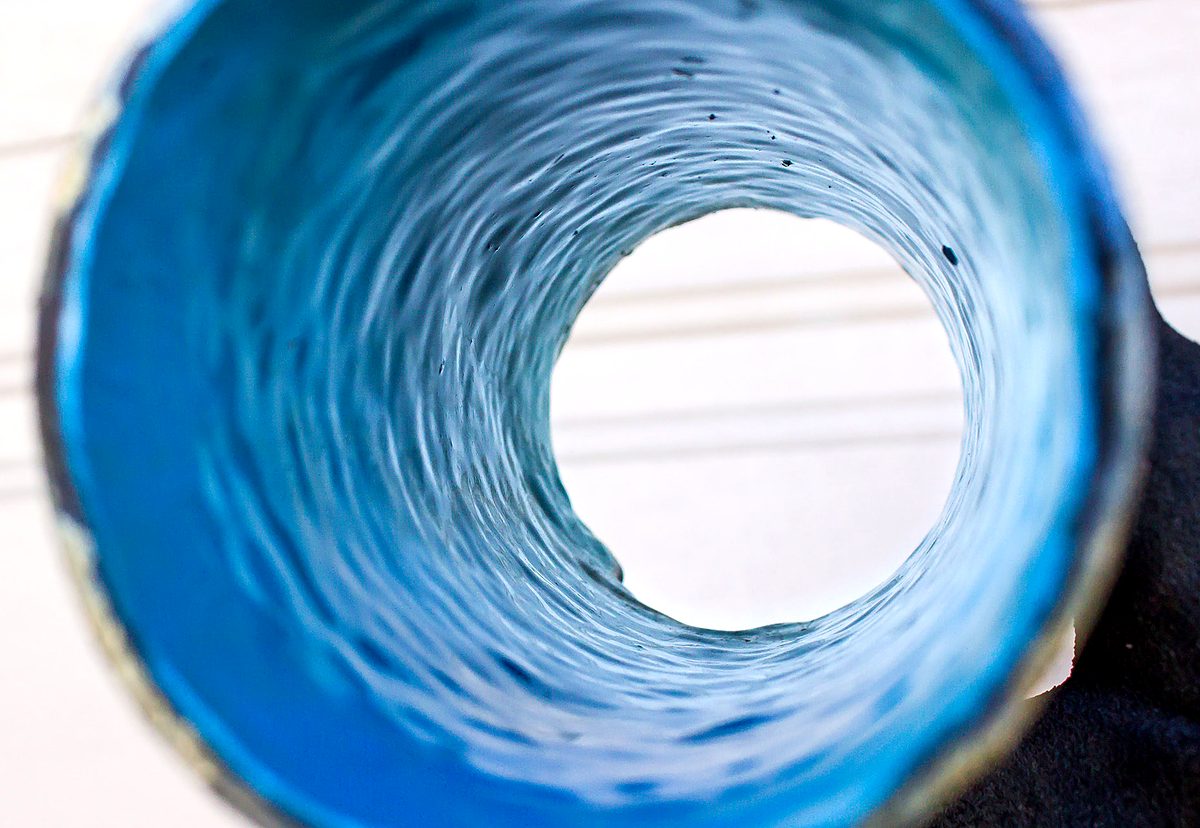
Over the years, grease, soap, food, sediment and hard-water scale coat the inside of a drain line a little at a time. Think of it like a clogged artery. Eventually the opening gets so narrow that a few paper towels are enough to stop everything. Jetting cuts all of that loose and flushes it down to the city sewer.
How a hydro jetter works
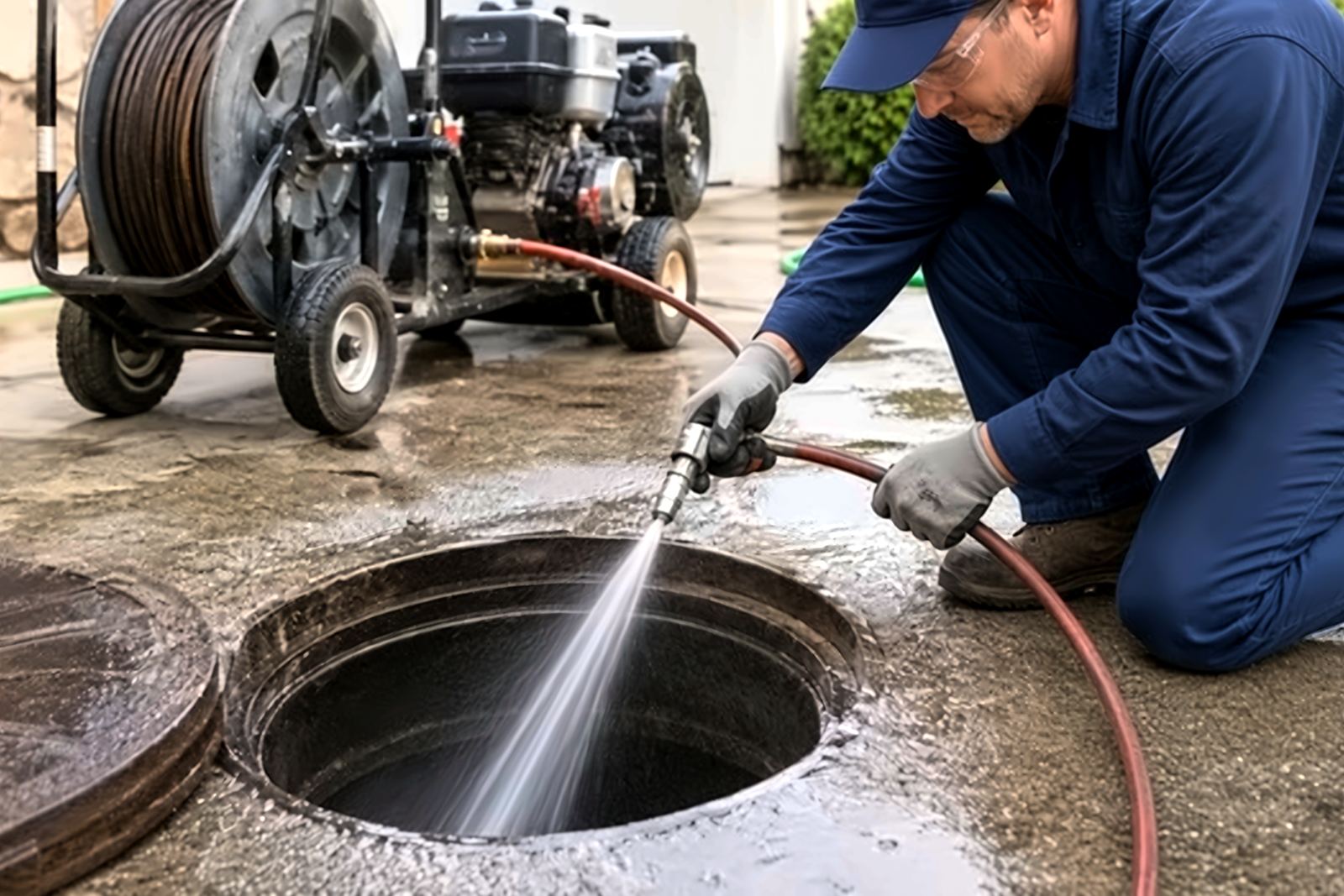
The machine is basically a high-pressure pump, a water supply and a long reinforced hose with a nozzle on the end. Most of the nozzle's jets point backward. That rear spray pulls the hose forward through the line and scrubs the walls as it goes, while a forward jet breaks up whatever is in front of it.
Jetters typically run somewhere between 1,500 and 4,000 PSI. We set the pressure for your pipe and the problem, and pick the nozzle the same way: one kind for packed clogs, another for greasy walls, a cutting head for roots.
When jetting is the right call
Grease clogs
Kitchen lines take the worst of it. Grease cools and hardens on the pipe walls like candle wax, and a snake slides right past most of it.
Clogs that keep coming back
If the same drain has been snaked twice this year, there's buildup left behind. Jetting gets the rest.
Tree roots
Fine roots get into the joints of old clay sewer lines all over Los Angeles. A root cutting nozzle chews through them and flushes them out.
Scale and sludge
LA's hard water leaves mineral deposits behind. Mixed with sludge, they narrow the line year after year.
Main line backups
When every drain in the house is slow at once, the problem is usually in the main sewer line. That's jetter territory.
Regular maintenance
Restaurants and buildings with a history of backups often have their lines jetted on a schedule so problems never build up.
What happens on a hydro jetting visit
Camera first
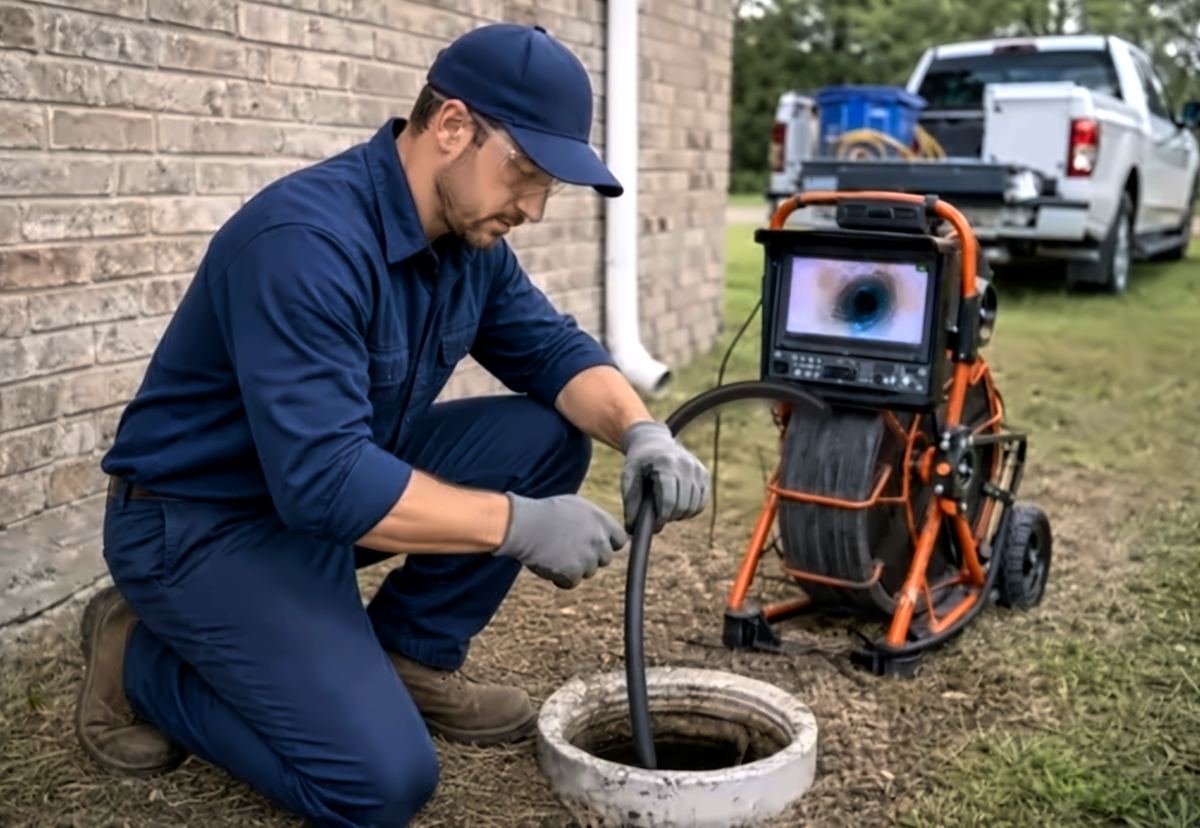
We run a camera down the line to see what we're dealing with: grease, roots, a sag in the pipe or a break. Jetting a pipe that's already broken isn't a good idea, so we check before we start.
Pick the nozzle
Different nozzles do different jobs. The pressure gets matched to the pipe material and its condition.
Jet the line
We go in through a clean-out and work the hose down the line and back, flushing everything to the city sewer.
Camera again
A second look confirms the pipe is clean all the way around. Then we run water to check the flow.
Snake or jetter?
A snake is cheaper, and it's the right tool for a simple clog in one fixture, like a toilet or a bathroom sink. Jetting costs more, but it cleans the whole pipe, so the results last longer, especially on kitchen lines and main lines.
We'll tell you which one your drain actually needs. If a regular drain cleaning will do the job, that's what we'll recommend. If jetting is the right call, we have a $399 Hydro Jet Drain Cleaning coupon.
Is hydro jetting safe for old pipes?
For pipes in decent shape, yes. Water is gentler on the pipe walls than a steel cable, and there are no chemicals involved. Badly deteriorated cast iron or a clay line that's already broken is a different story. High pressure can make a weak spot worse, which is why the camera always goes in first.
If your line is too far gone for jetting, we'll talk to you about other options, like descaling, Epoxy Coating for Drain Pipes or sewer line repair.
Hydro Jet Drain Cleaning Service in Los Angeles, CA. We jet drain and sewer lines in homes and businesses across Los Angeles, Glendale, Pasadena, Burbank and the Valley. Call 818.468.2385 or 323.918.6108.
More photos
Questions people ask
How long does hydro jetting take?
Most homes take one to three hours, camera inspection included. A long main line or heavy root growth can take longer.
Will it make a mess?
No. The work happens inside the pipe. We go in through a clean-out, usually outside, and the debris goes down the line to the city sewer.
How often should drains be jetted?
Most homes never need it on a schedule. Restaurants and buildings with lots of grease or a history of backups often do it every six to twelve months.
What else is it called?
You might hear it called hydro jetting, water jetting or high-pressure jetting. It's the same service. We call it Hydro Jet Drain Cleaning Service.
How much does it cost?
That depends on the length of the line, how bad the buildup is and how easy it is to reach a clean-out. We charge by the job and not by the hour, so you'll have a firm price after the inspection, before we start.